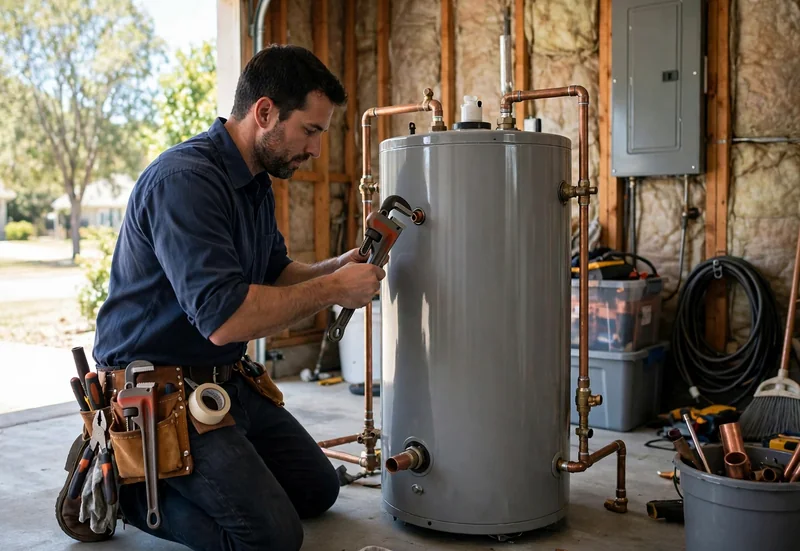
The short answer: Flush a tank water heater about once a year in most homes, and about every six months if your water is hard or your well brings in sediment. Flushing drains the sediment that settles on the tank bottom, the layer that causes rumbling, wastes energy, and eats the tank from inside. It is the cheapest lifespan your water heater will ever get.
Why sediment is the enemy
Every gallon that enters your tank carries a little mineral and, on well water, a little grit. It settles. On the tank bottom it forms an insulating blanket that traps heat and boiling water against the steel, which is the popping and rumbling you hear, and it accelerates corrosion of the tank lining.
Electric heaters suffer a second way: sediment buries the lower element until it overheats and burns out. A heater that runs out of hot water suspiciously fast often has exactly this problem, and it is diagnosed in minutes.
The yearly rhythm, and the honest exceptions
Set a yearly date, many people pick the fall, and drain several gallons until the water runs clear, or do a full flush. Check the anode rod every few years, since that rod is what corrodes so your tank does not have to.
One honest exception: a very old tank that has never been flushed can be a flush with care situation, because its drain valve may not reseal and sediment may be plugging a leak that is already there. On a heater past ten years, we talk through that risk before anyone opens the valve.
Can you do it yourself?
A careful homeowner can: power or gas off, cold supply closed, a hose to a safe drain point, and patience with hot water. The steps are simple and the hazards are real, scalding water, a valve that will not close, a heater refilled wrong. Follow the maker's instructions exactly if you try it.
Many of our customers fold flushing into a maintenance visit along with a valve and anode check, which turns a chore into an inspection. Either way, the point is the rhythm, not who holds the hose.
Tankless owners: different chore, same idea
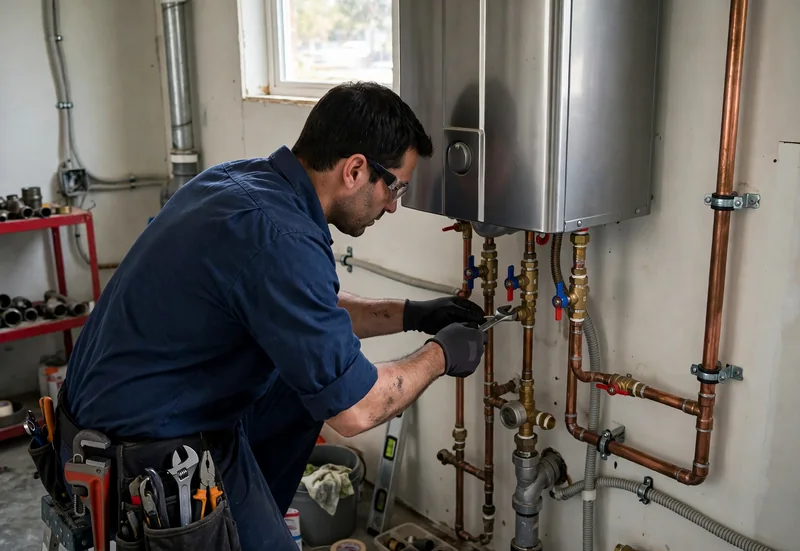
Tankless units do not store sediment, but their heat exchangers scale from the inside in hard water and need a descaling flush with a pump about once a year. Skipping it is the top cause of tankless errors and early failures in this area.
Whether you own a tank or a tankless in Cheatham County, water quality decides how strict the rhythm must be. Hard well water means shorter intervals, and a test tells you which household you are.
Quick Reference
| Situation | Likely cause or next step |
|---|---|
| City water, family home | Flush yearly |
| Well water with sediment | Flush every 6 months |
| Tankless, hard water | Descale yearly |
| Old tank, never flushed | Ask before flushing |
Related Reading
Services That Help
Questions about your own house? Call (615) 583-1830 and describe what you are seeing. We would rather talk it through than have you guess.