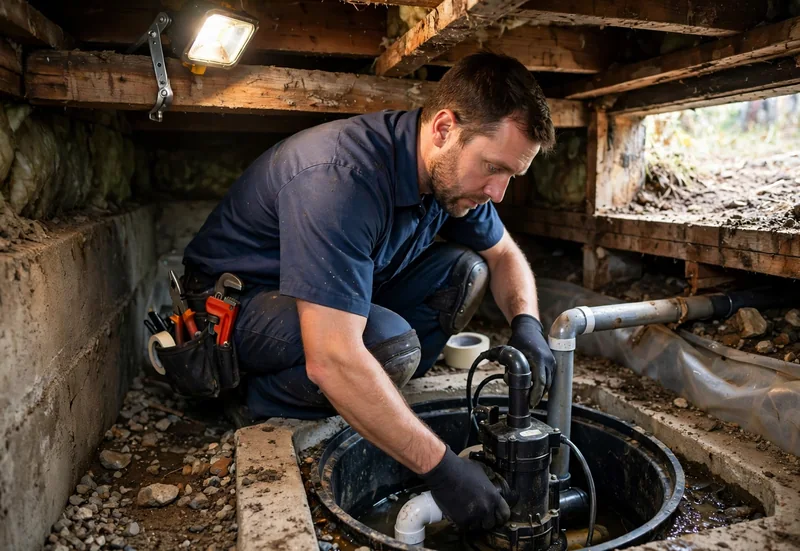
The short answer: Cheatham County gets about 52 inches of rain a year, and spring delivers it in bunches. For river-bottom homes near the Cumberland River, Cheatham Lake, and Sycamore Creek, a working sump pump with a battery backup is the difference between a wet week and a flooded floor. Test yours before the spring pattern sets in, not during the first big storm.
Why spring is the test
Water tables rise with weeks of rain, and a pit that sat dry all winter can start cycling every few minutes in March. A pump that failed quietly in October announces itself in April, with water over the floor. The failure is rarely sudden; floats stick, check valves fail, and switches wear, all silently.
A five-minute test in February, pour water in the pit and watch a full cycle, finds most of it while the fix is still a choice instead of an emergency.
The backup question
The storms that push the most water into your pit are the same ones that knock out power across rural Cheatham County. A primary pump without power is a bucket with a cord. A battery backup pump keeps cycling for hours and sounds an alarm while it works.
Homes that have flooded once without power rarely argue about the backup the second time. If your pit fills during storms, treat the backup as part of the pump, not an accessory.
Discharge: the forgotten half
A strong pump with a bad discharge still floods. The line must carry water away from the foundation, stay clear of ice and mulch blockages, and never dump into the septic system. Walk your discharge after a rain and confirm it is actually moving water where you think it is.
Check valves matter too. Without one, the water in the vertical pipe falls back into the pit after every cycle and the pump re-pumps the same water all night, wearing itself out early.
When to call us
Call when the pump runs but cannot keep up, cycles oddly, sounds rough, or when your pit fills with no working backup before storm season. Also call before spring if your pump is past seven to ten years old and has never been looked at. Our flood and sump page gathers the whole river-bottom playbook in one place.
Quick Reference
| Situation | Likely cause or next step |
|---|---|
| Pit fills during storms | Test pump and add backup |
| Pump older than 7-10 years | Plan replacement before spring |
| Water returns to pit after cycles | Check valve failing |
| Discharge ends at foundation | Extend it away from the house |
Related Reading
Services That Help
Questions about your own house? Call (615) 583-1830 and describe what you are seeing. We would rather talk it through than have you guess.